Servus Christi Objections
Responses to the historical, biblical, and pastoral objections raised in The Pretrib Rapture Deception: A False Hope.
These responses address the historical, biblical, and pastoral arguments in Servus Christi’s video The Pretrib Rapture Deception: A False Hope. Start with the part that matches your concern, or read the three in order to move from the doctrine’s history to the disputed passages and then its implications for Christian life. Each response can also be read on its own.
Three-Part Response
- Church History and Origins Objections asks what Darby contributed and how earlier writers should be compared with the later pre-tribulation system. It considers Pseudo-Ephraem, Morgan Edwards, early-church claims, and the difference between doctrinal development and invention.
- Exegetical and Timing Objections brings together Matthew 24, Thessalonians, imminence, Greek terminology, the restrainer, and the saints in Revelation. Read this first if the objection troubling you is about the Bible’s sequence rather than church history.
- Pastoral and Typological Objections addresses comfort, persecution, readiness, Jesus’ warnings, and the use of Enoch and Noah. It distinguishes hope of deliverance from future wrath from an expectation that Christians will never suffer.
When You Want a Closer Look at One Argument
After the history response, Pre-Darby Rapture Sources considers earlier precedents in more detail. Ribera, Lacunza, Irving, and Darby takes up the separate claim of dependence on Jesuit futurism. Neither historical question replaces the need to interpret the biblical passages.
For the comparison at the heart of the timing debate, read Does Matthew 24 Describe the Rapture?. Follow it with Meet the Lord if your question is where believers go after the meeting, or Greek Words for Christ’s Coming if it concerns shared vocabulary. Tribulation Saints and the Bride examines the identity of Revelation’s persecuted believers.
For the positive argument behind these replies, read Best Case for the Pre-Tribulation Rapture. If your concern is the way prophecy teaching can encourage fear or speculation, How to Study Bible Prophecy Without Sensationalism provides practical help with date-setting, modern claims, and typology.
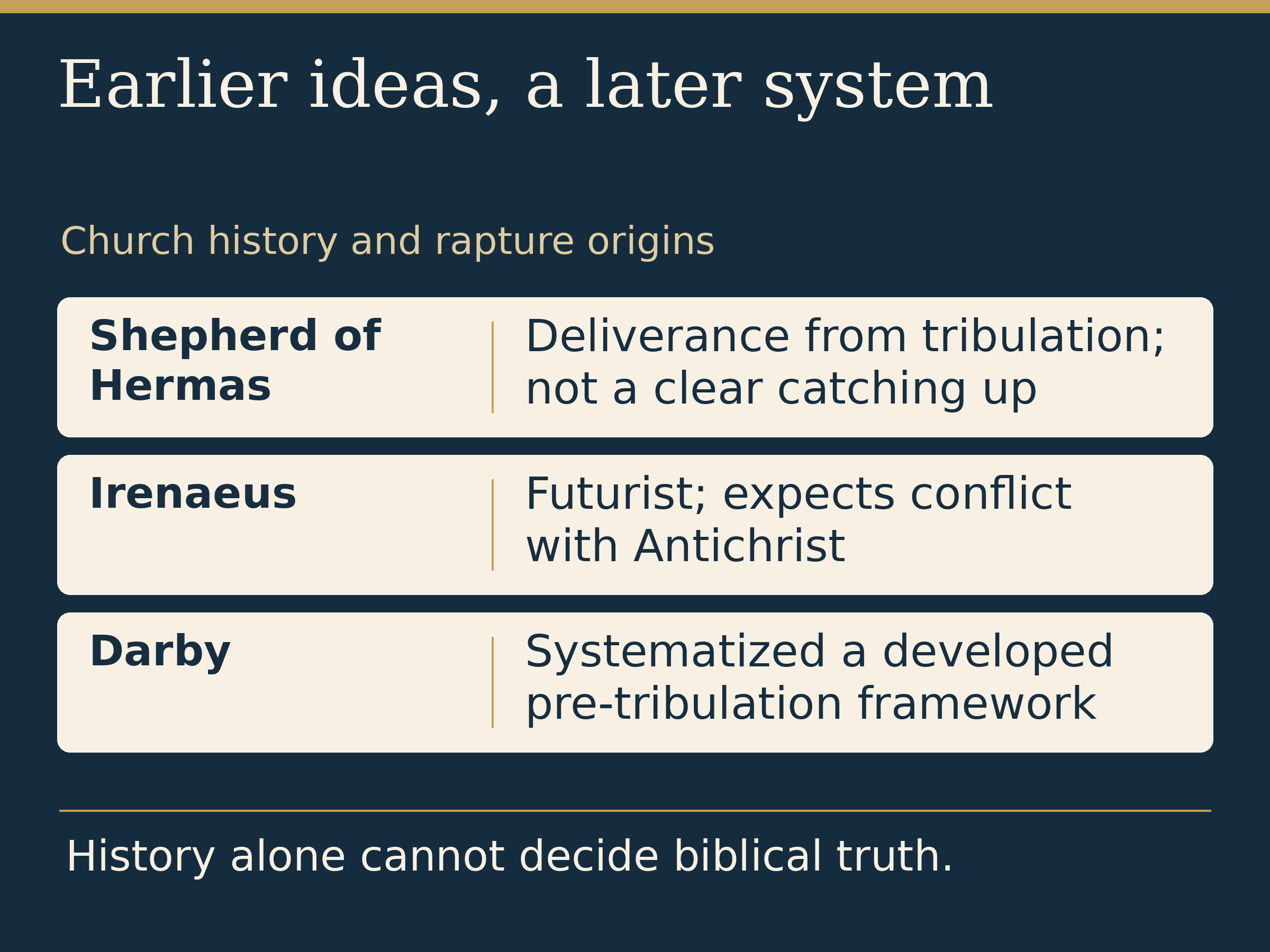
Church History and Origins Objections to the Pre-Tribulation Rapture
A careful response on Darby, Pseudo-Ephraem, early-church claims, Morgan Edwards, and the limits of historical arguments.
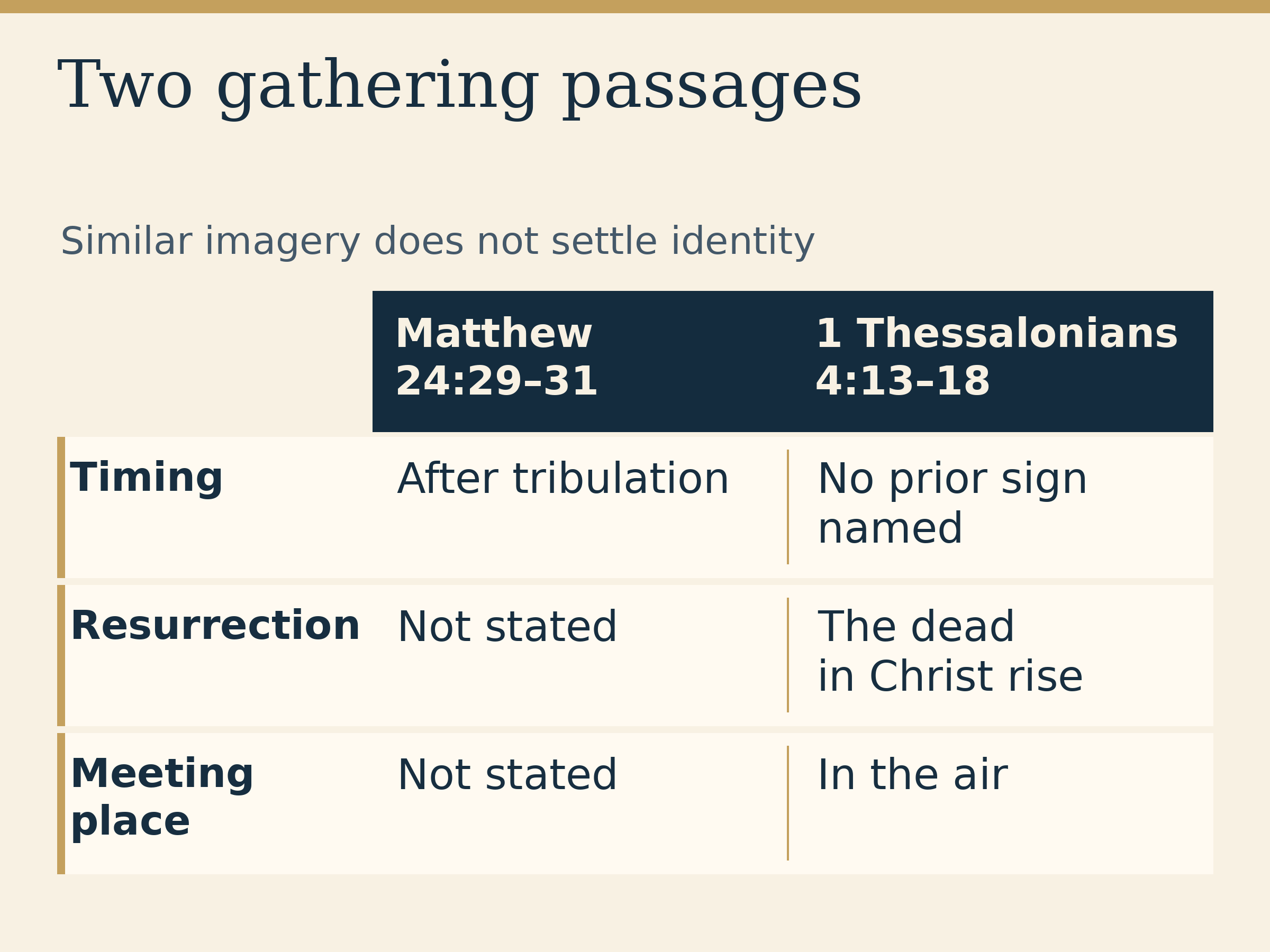
Exegetical and Timing Objections to the Pre-Tribulation Rapture
A text-centered response on Matthew 24, Thessalonians, imminence, Greek terminology, restraint, and the church in Revelation.
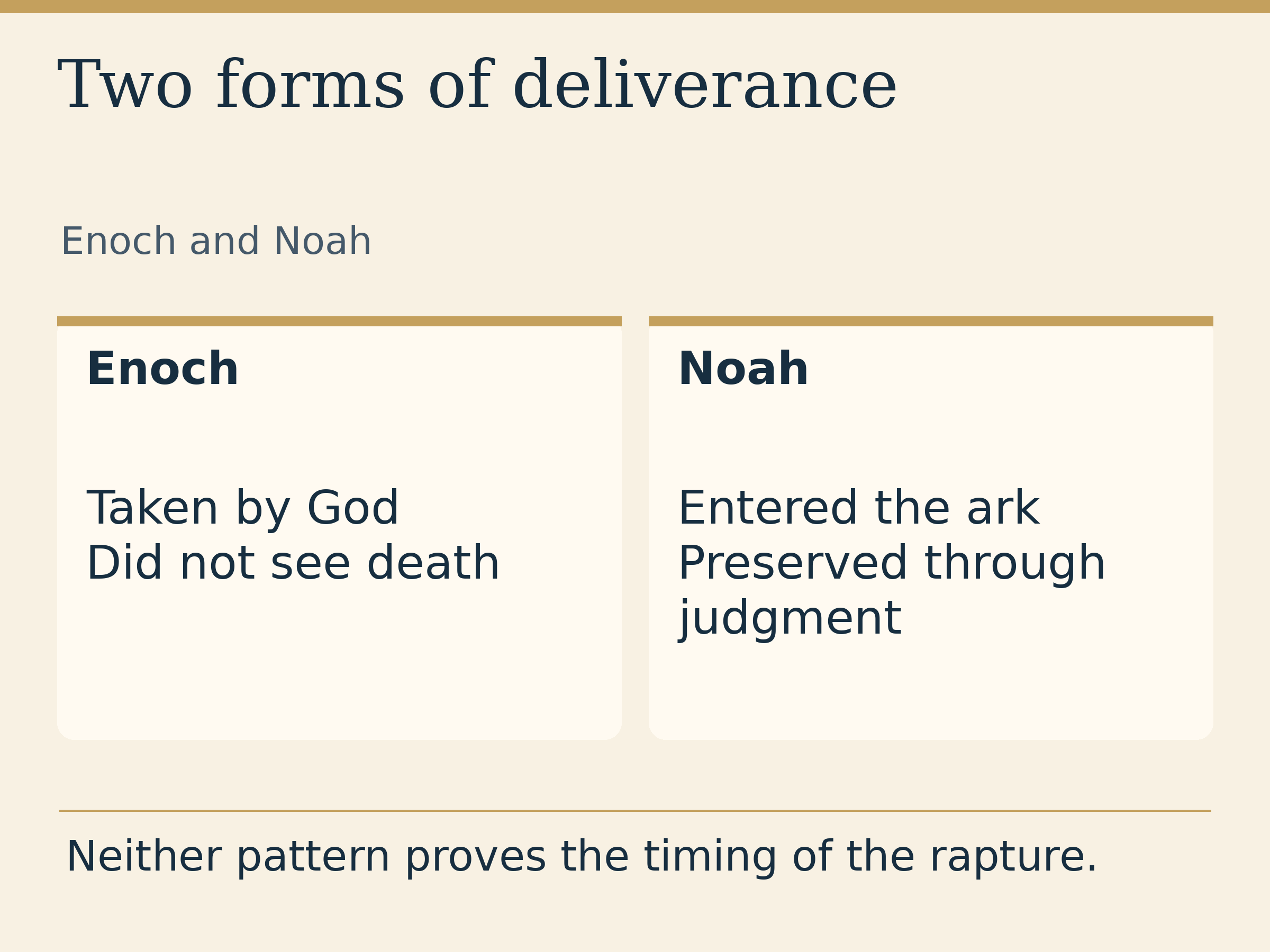
Pastoral and Typological Objections to the Pre-Tribulation Rapture
A pastoral response on comfort, persecution, preparedness, Enoch and Noah, Jesus’ warnings, and the misuse of escape language.