Common Objections
Clear, fair responses to the most frequently raised objections against the pre-tribulation rapture.
If a particular passage makes you question a pre-tribulation rapture, start with that passage. The disagreements are not all the same: some concern the timing of the gathering, others the meaning of a word, and others the history or practical effects of the teaching. The routes below keep those questions distinct.
The Gathering and Christ’s Return
Begin with Does Matthew 24 Describe the Rapture? if your objection is that Jesus places the gathering after the Tribulation. The study accepts that sequence and asks whether Matthew’s gathering is the same event Paul describes. Follow it with The Last Trumpet to compare Paul’s resurrection trumpet with Revelation’s seventh trumpet.
Two Separate Comings of Christ? examines the proposed interval between Christ receiving His people and appearing publicly. For the language behind that debate, read Greek Words for Christ’s Coming, then Meet the Lord. The latter asks whether meeting Christ requires an immediate return to earth.
Paul’s Sequence and Revelation’s Saints
Can the Rapture Really Be Imminent? is the starting point for objections about events that must happen first. Its discussion of 2 Thessalonians 2 leads to two separate studies: The Apostasy or the Departure? favors rebellion over a physical departure, while The Restrainer weighs the identity Paul leaves unnamed.
For Revelation’s believers, pair Tribulation Saints with The First Resurrection. One concerns who the saints are; the other asks whether resurrection unto life must occur at one indivisible moment.
History and Pastoral Concerns
Pre-Darby Rapture Sources examines earlier precedents without equating them with a fully developed modern system. Ribera, Lacunza, Irving, and Darby addresses the different claim that the doctrine came from Jesuit futurism.
For the Servus Christi critique, choose the history response, biblical timing response, or pastoral response. The pastoral discussion addresses suffering, preparedness, and the use of Enoch and Noah. A promise of deliverance from future wrath is not a promise that Christians will avoid persecution now.
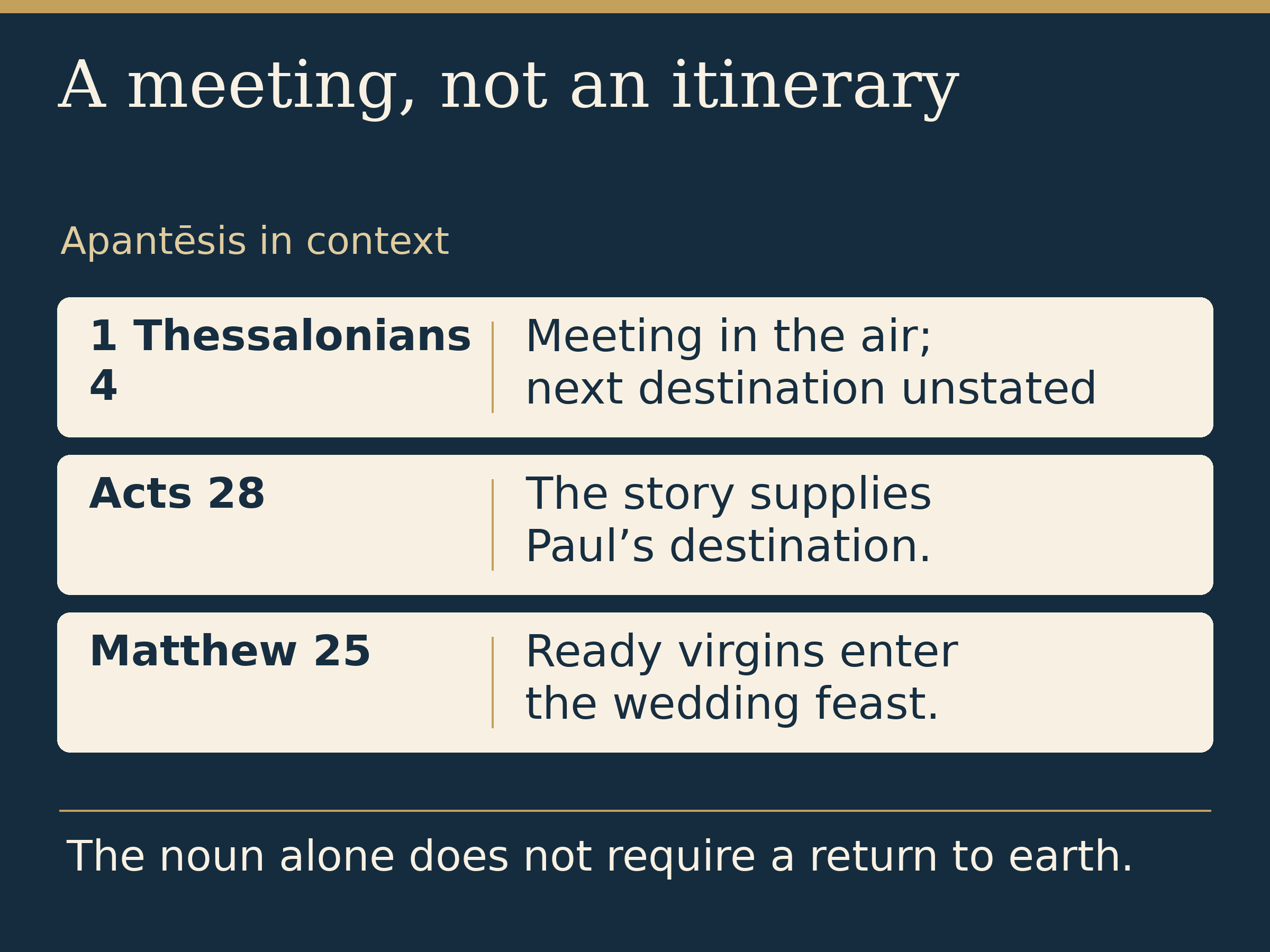
Does "Meet the Lord" Mean Believers Immediately Return to Earth?
The meeting language in 1 Thessalonians 4 is tested against ancient reception imagery, John 14, and public-appearing passages.
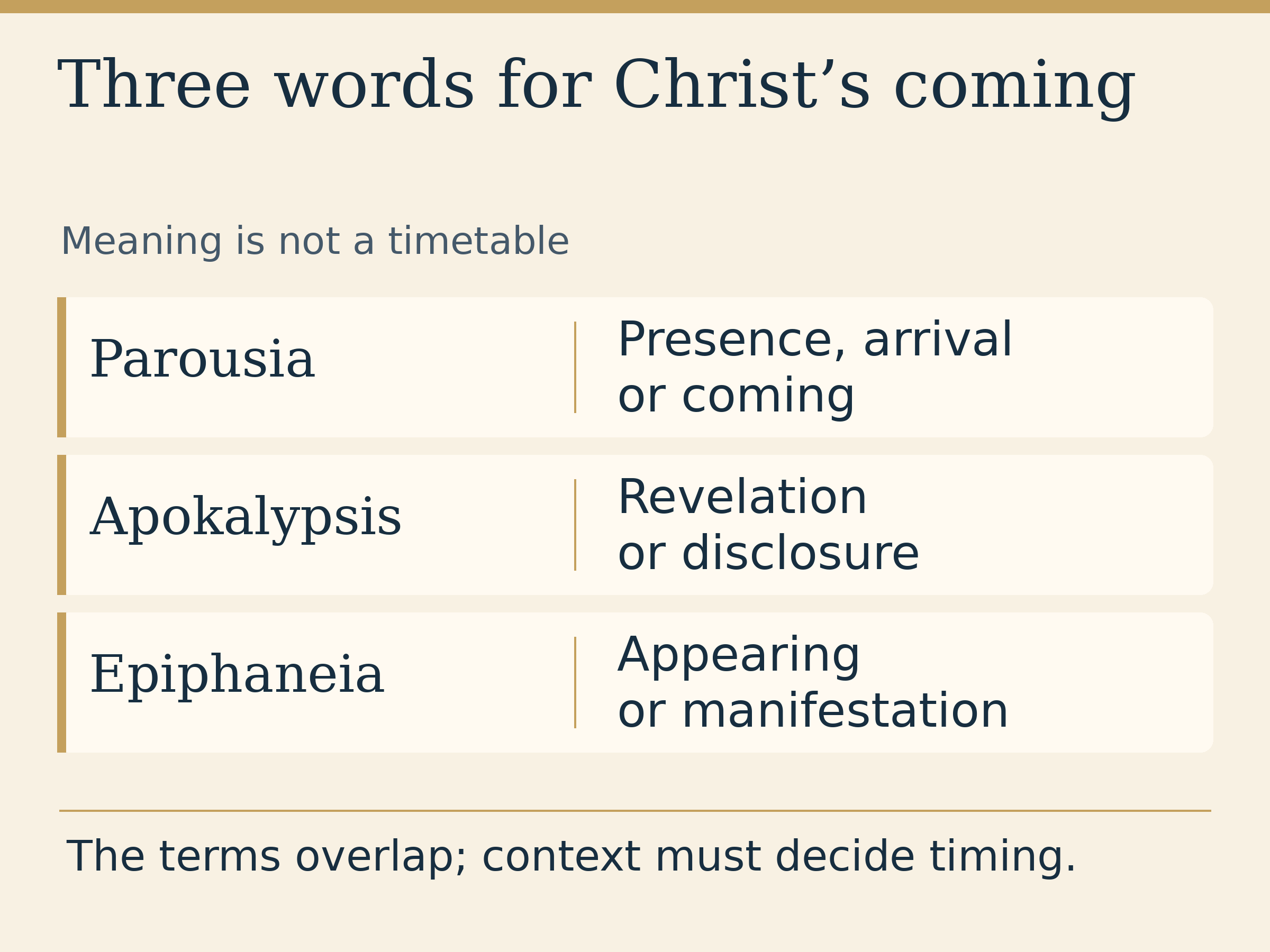
Do the Greek Words for Christ's Coming Disprove a Two-Stage Return?
Parousia, apokalypsis, and epiphaneia are examined to see whether Greek vocabulary alone can disprove distinguishable phases of Christ’s return.
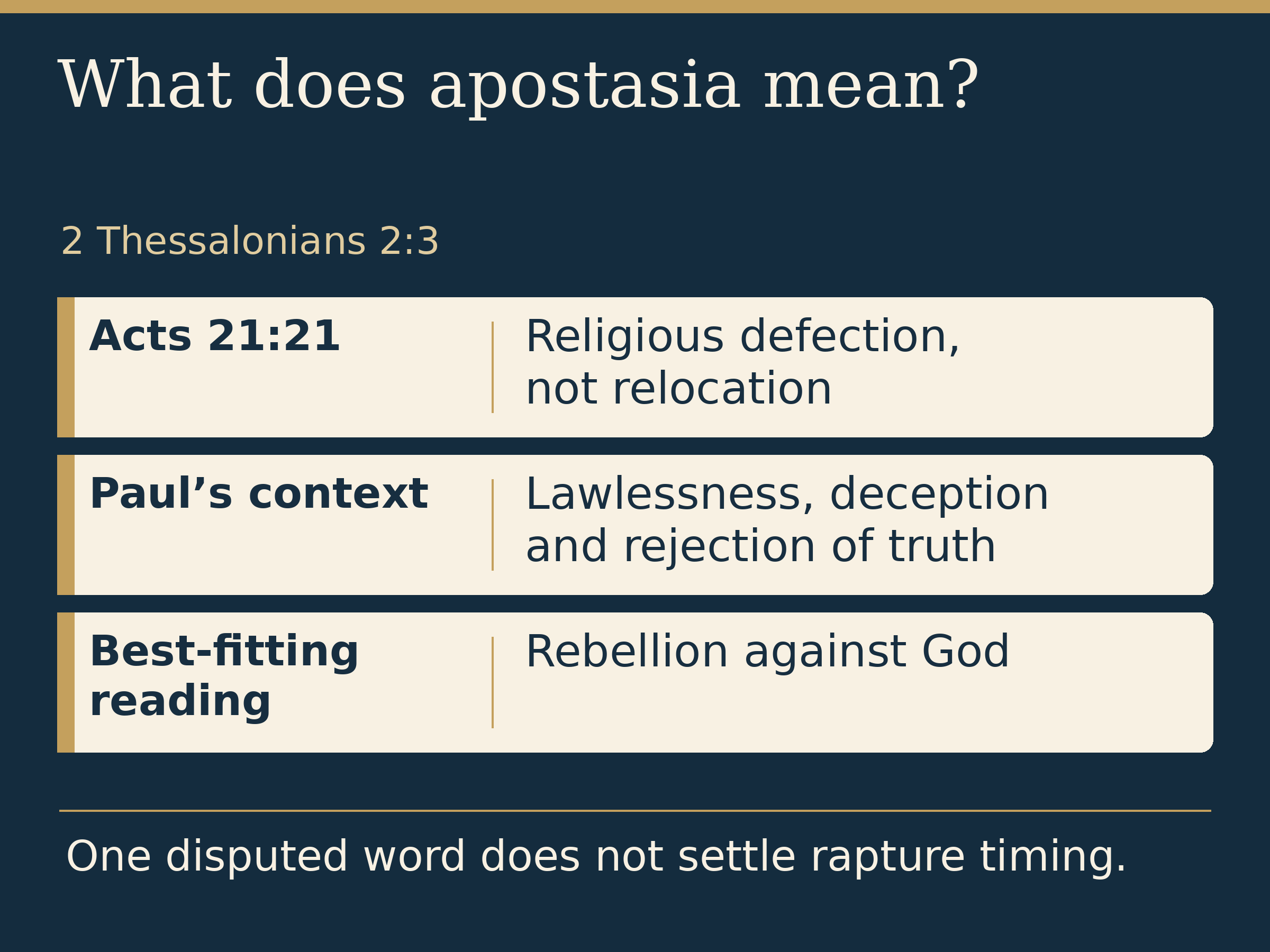
The Apostasy or the Departure? What Does 2 Thessalonians 2:3 Mean?
Second Thessalonians 2:3 is studied through grammar, context, apostasy/departure arguments, the man of lawlessness, and pastoral correction.
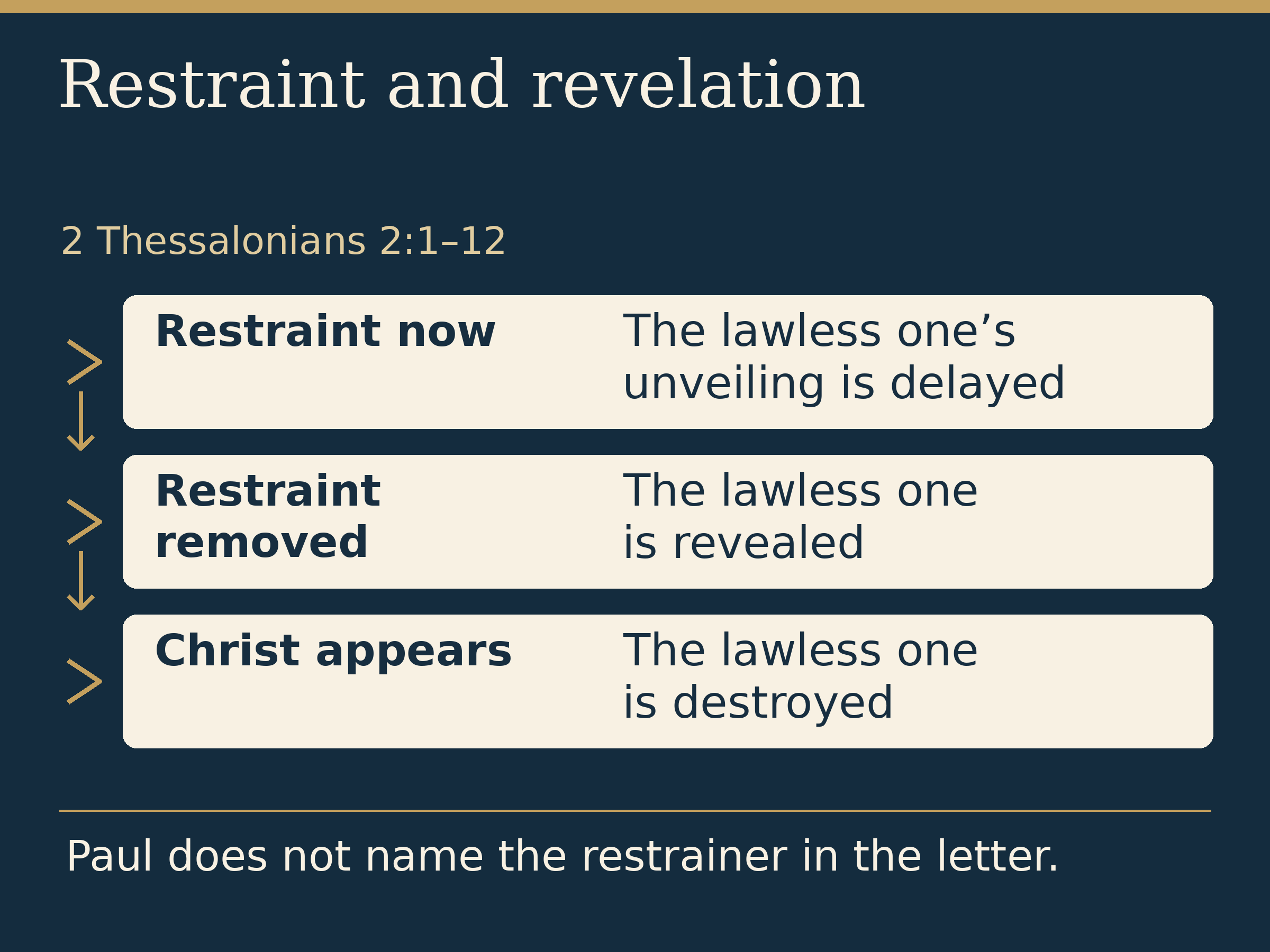
Who Is Holding Back the Antichrist in 2 Thessalonians 2?
The restrainer is examined through Paul’s sequence, lawlessness, Daniel 7, Revelation 13, and the debated role of the Spirit-indwelt church.
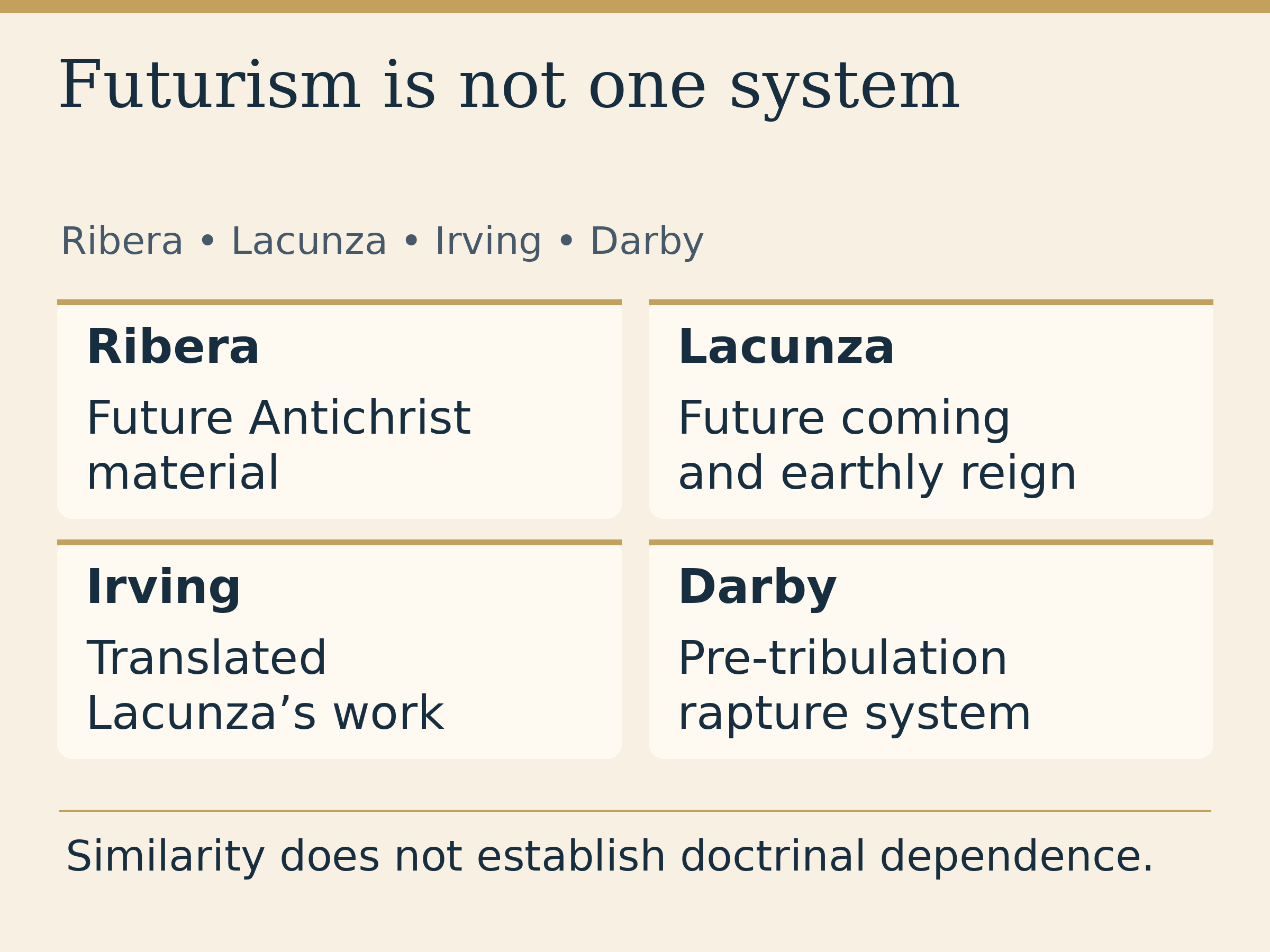
Ribera, Lacunza, Irving, and Darby: Did the Rapture Come From Jesuit Futurism?
Ribera, Lacunza, Irving, and Darby are separated from internet-origin claims so history is not used as a substitute for exegesis.
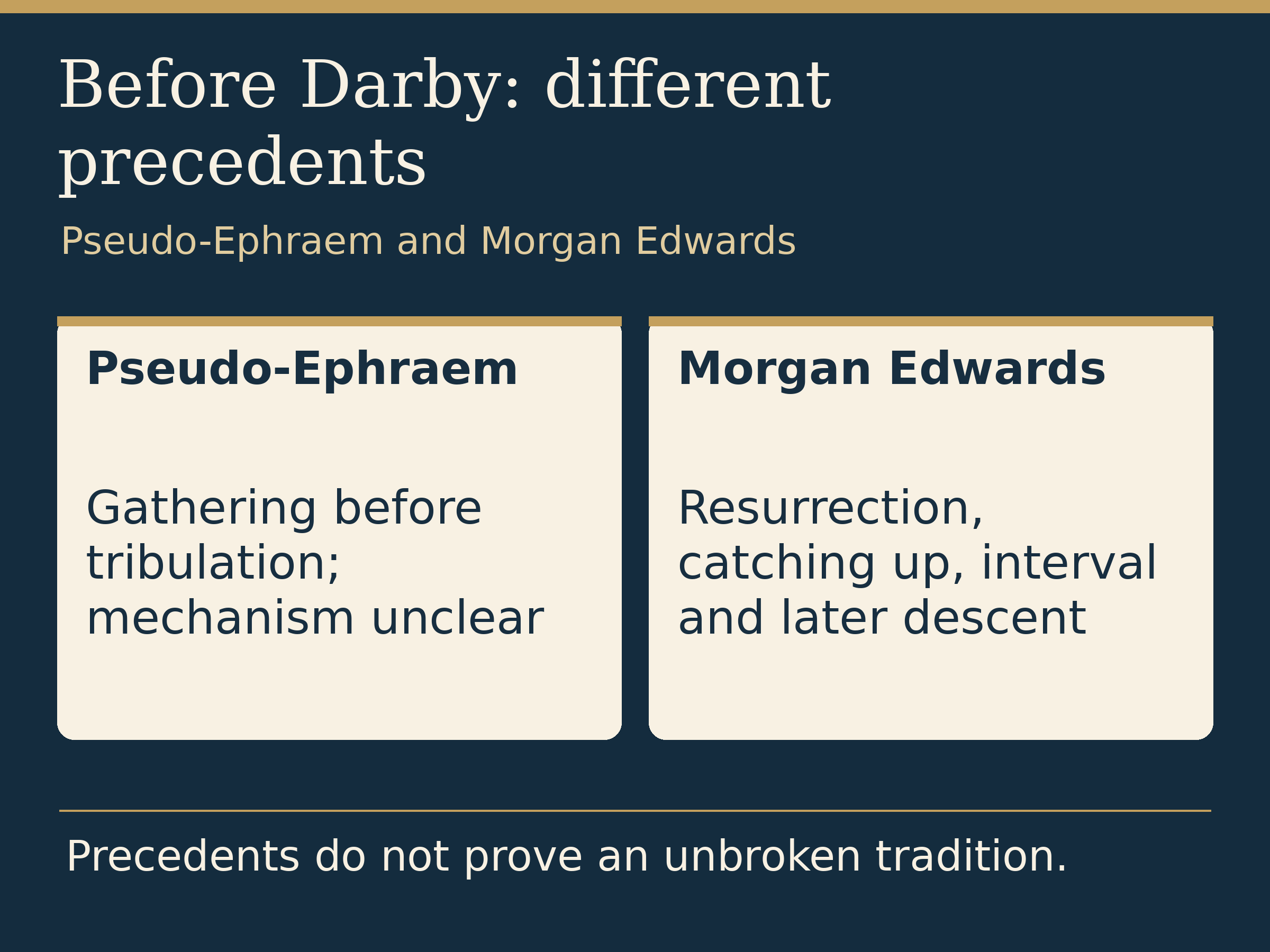
Did Christians Teach a Pre-Trib Rapture Before Darby? Testing the Primary Sources
Pseudo-Ephraem, Morgan Edwards, and early sources are handled as historical evidence, not as prooftexts for the whole pre-trib system.
How the First Resurrection Relates to the Pre-Tribulation Rapture
How Revelation 20, 1 Thessalonians 4, and 1 Corinthians 15 can describe a resurrection unto life with ordered participants.
Does the Bible Teach Two Separate Comings of Christ?
John 14, 1 Thessalonians 4, Matthew 24, Revelation 19, and Titus 2 are compared to test whether one future coming can include distinguishable movements.
Does Matthew 24 Describe the Rapture?
Matthew 24’s post-tribulation gathering is compared with 1 Thessalonians 4 by timing, agents, resurrection, and pastoral purpose.

What Does “the Last Trumpet” in 1 Corinthians 15 Mean?
Paul’s last trumpet is compared with Revelation’s seventh trumpet by context: resurrection and transformation versus kingdom judgment.

Can the Rapture Really Be Imminent?
Imminence is distinguished from date-setting by comparing expectancy, signless hope, Matthew 24, and 2 Thessalonians 2.