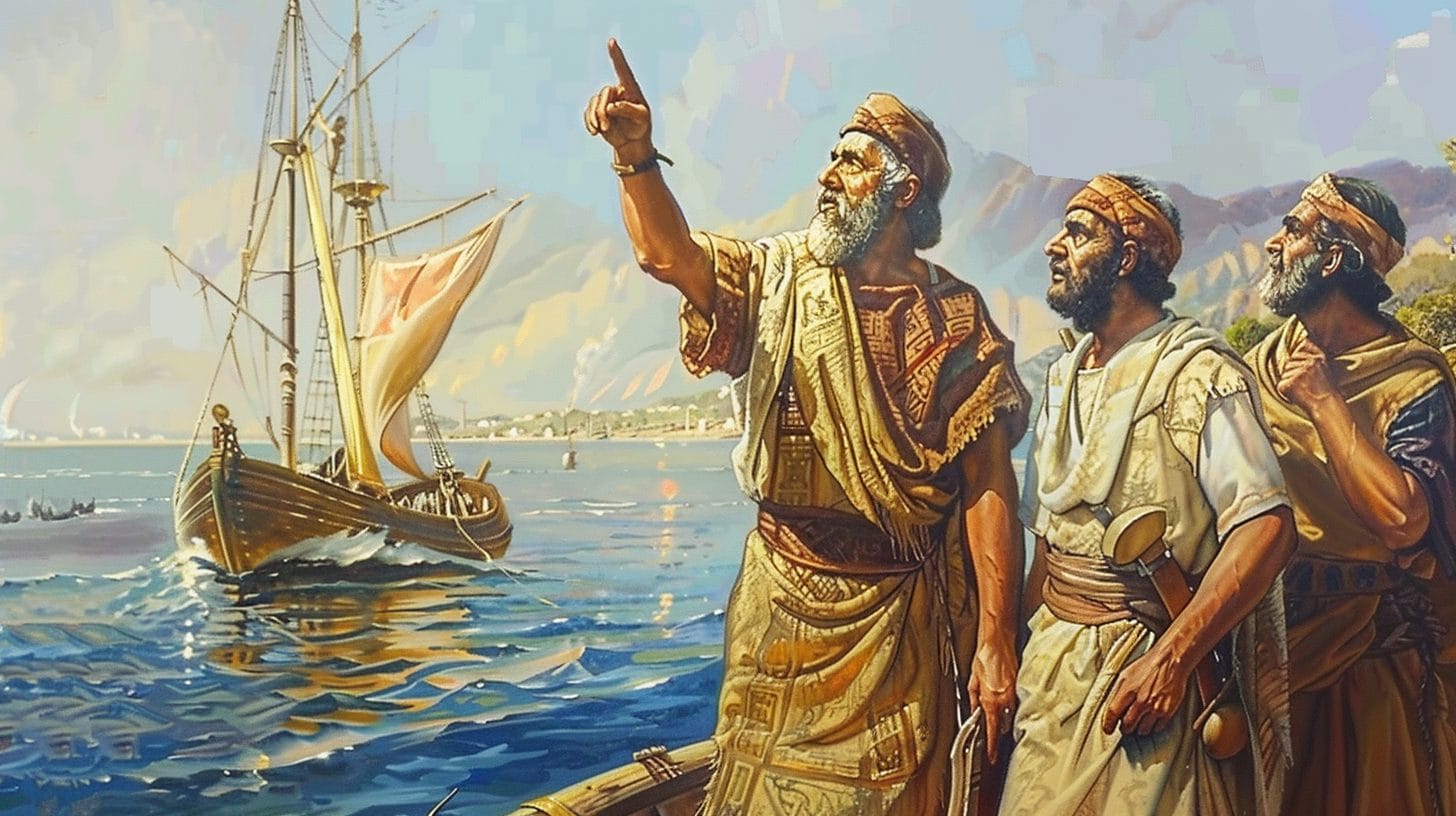
Gomer appears in Genesis 10:2–3 as a son of Japheth and later appears in Ezekiel 38:6 as part of the coalition associated with Gog. Because Ezekiel’s prophecy names ancient peoples rather than modern nation-states, the question “Where is Gomer today?” should be answered carefully. This article treats Gomer as an ancient biblical name first, then explains why some futurist interpreters associate it with regions connected to Anatolia or areas around modern Turkey, without turning that proposal into a dogmatic claim about present-day Turkey or its people.
Quick answer: Identifying Gomer should be done cautiously: the main value is understanding Ezekiel’s coalition, not making sensational newspaper predictions.
Where Gomer Appears in Scripture
- Ezekiel 38:6: Gomer appears in the Gog coalition.
- Genesis 10:2-3: Gomer is listed among Japheth’s descendants.
- Ezekiel 39:21-29: The prophecy ends with God’s vindication and Israel’s restoration.
Gomer in the Biblical Text
The first mention of Gomer is genealogical. Genesis 10 lists Gomer among the descendants of Japheth. Ezekiel 38:6 later names “Gomer and all his hordes” in the coalition connected with Gog. The Ezekiel context is therefore the most important passage for prophecy study, but Genesis provides the broader Table-of-Nations background.
The text does not explain Gomer’s later migration history in detail. It simply places Gomer among the peoples included in Ezekiel’s oracle. That means modern identification must be argued from historical geography and ancient sources, not assumed from the biblical name alone.
Historical-Geographical Possibilities
Many interpreters connect Gomer with the ancient Cimmerians, a people associated in ancient sources with regions north of the Black Sea and later movements into Anatolia. Others discuss possible connections with peoples or regions known in Asia Minor. Josephus associated the Gomerites with the Galatians, though Josephus should be used as a historical witness rather than as inspired interpretation.
Those lines of evidence explain why some futurist interpreters associate Gomer with regions connected to Anatolia or areas around modern Turkey. That proposal should be treated as a historical-geographical possibility, not as a claim that modern Turkey, its citizens, or any religious population is prophetically fixed as an enemy.
Why Modern Claims Need Caution
Ancient names rarely map cleanly onto modern borders. Modern Turkey includes diverse citizens, histories, political movements, and religious communities. Even if Gomer is connected with ancient Anatolia, that does not mean every modern political development in Turkey should be presented as direct fulfillment of Ezekiel 38.
Current events may make the passage feel vivid to readers, but they should not be used as proof that a specific fulfillment is underway. The better approach is to say that Ezekiel describes a future coalition using ancient names, and that interpreters continue to debate how those names relate to later geography.
Gomer and the Gog-Magog Coalition
Within Ezekiel 38, Gomer is one part of a larger coalition. The main point is not Gomer in isolation, but the scope of the attack and God’s public intervention on behalf of Israel. The prophecy emphasizes God’s holiness and sovereignty before the nations.
For that reason, Gomer should be studied alongside Magog, Meshech, Tubal, Persia, Cush, Put, and Beth-togarmah. Each name contributes to the picture, but none should be used as a shortcut for sensational claims about today’s headlines.
How Pre-Tribulation Interpreters Use This Passage
Pre-tribulation interpreters often place Ezekiel 38–39 before, early in, or near the Tribulation period, though there is disagreement about exact timing. Gomer’s identification may affect how one imagines the geography of the future coalition, but it does not determine the timing of the rapture by itself.
The responsible conclusion is modest: Gomer may point toward ancient peoples associated with regions around Anatolia, and some futurist interpreters see possible relevance for a future northern coalition. But Scripture does not require dogmatic modern identification before the event occurs.
What This Establishes
Gomer belongs to the wider Gog-Magog coalition in Ezekiel 38 and deserves study as part of biblical geography and prophecy. The ancient-name evidence can support a cautious discussion of regions around Anatolia or related areas.
What This Does Not Establish by Itself
Gomer does not prove that modern Turkey, Turkish citizens, Muslims, or any present religious or national population is prophetically fixed as an enemy. It also does not prove that current political shifts are direct fulfillment of Ezekiel’s prophecy. Those claims go beyond what the text itself requires.
A Geography Safeguard
Ancient people names do not map neatly onto modern citizenship. Even if Gomer is connected with Cimmerian movements into Anatolia, that does not make every resident of modern Turkey a participant in Ezekiel’s coalition. Borders, languages, and populations changed repeatedly. The historical proposal helps readers locate the ancient horizon; it does not authorize hostility toward a modern people.
A modern identification should be stated as a geographic possibility, not a prophecy headline. Ezekiel’s controlling message is that God defeats the invader and vindicates His holiness.
Why a Regional Identification Is Better Than a Modern Label
The Cimmerian connection helps locate Gomer in the ancient world, but ancient populations moved through territories now divided among several countries. Anatolia, the Black Sea region, and neighboring areas changed rulers, languages, and borders repeatedly. Saying that the evidence points broadly toward Anatolia is more defensible than announcing that one present nation is “Gomer” in an exhaustive prophetic sense.
This distinction also protects ordinary people from being treated as prophetic enemies because of where they live. Ezekiel names a coalition that God judges; the passage is not a license to assign guilt to a modern ethnicity. Historical geography can clarify the oracle while humility limits the modern application.
Works Cited
The Holy Bible, especially Genesis 10:2–3 and Ezekiel 38:1–6. These passages identify Gomer genealogically and place the name within Gog’s coalition.
Block, Daniel I. The Book of Ezekiel, Chapters 25–48. New International Commentary on the Old Testament. Eerdmans, 1998. Block supplies the oracle’s literary setting and cautious historical geography.
Cook, Stephen L. Ezekiel 38–48. Anchor Yale Bible 22B. Yale University Press, 2018. Cook is used to check how ancient names function in the Gog oracle without forcing modern borders.
Josephus. Antiquities of the Jews, 1.6.1. Josephus is cited as an ancient witness connecting Gomer’s descendants with Galatians, not as inspired interpretation or a modern identification.
Yamauchi, Edwin M. Foes from the Northern Frontier: Invading Hordes from the Russian Steppes. Baker Book House, 1982. Yamauchi is used for Cimmerian history and for evaluating popular northern-nation claims.